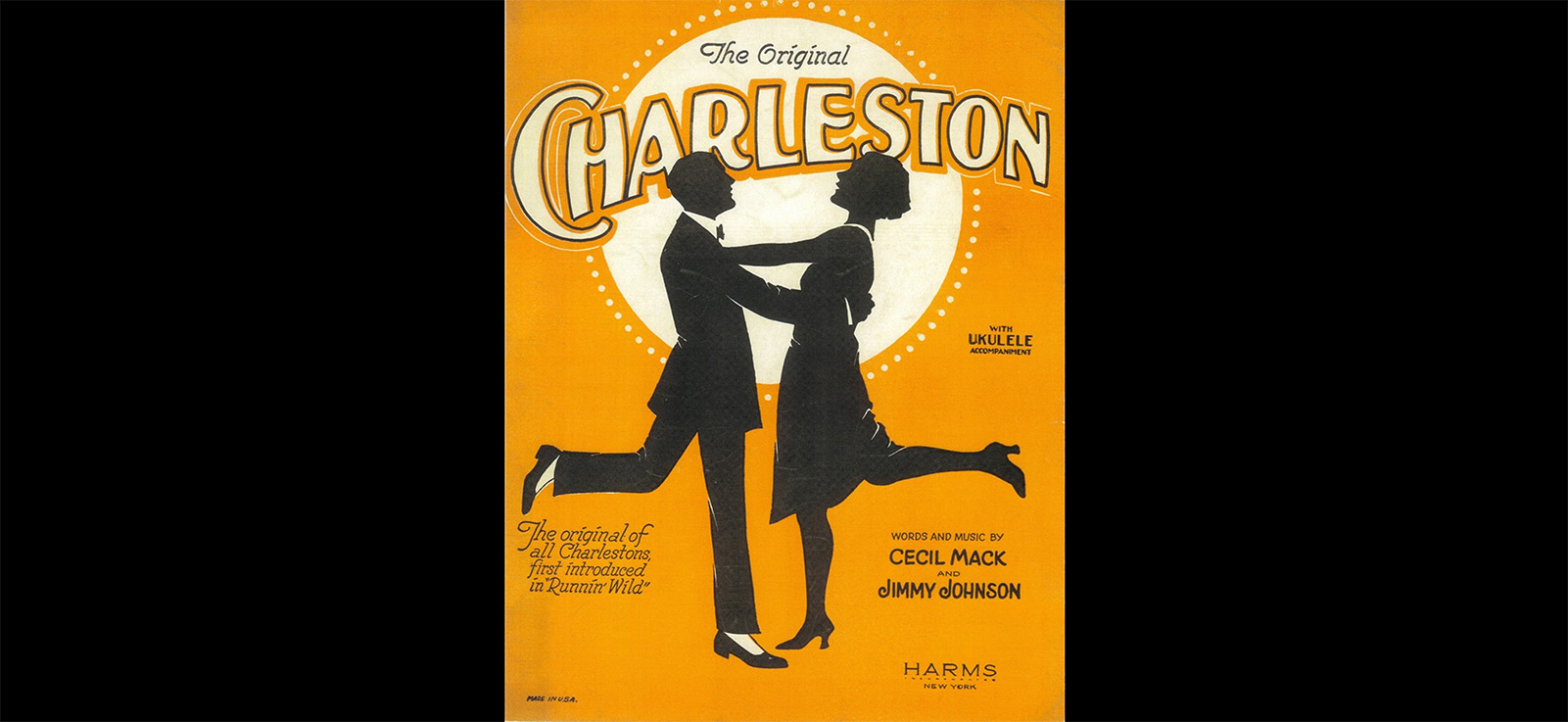
Sheet music cover, 1925
Author's Collection
The Makings of a Broadway Hit: the “Charleston,” James P. Johnson, and San Juan Hill
July 17, 2026
by Scott E. Brown
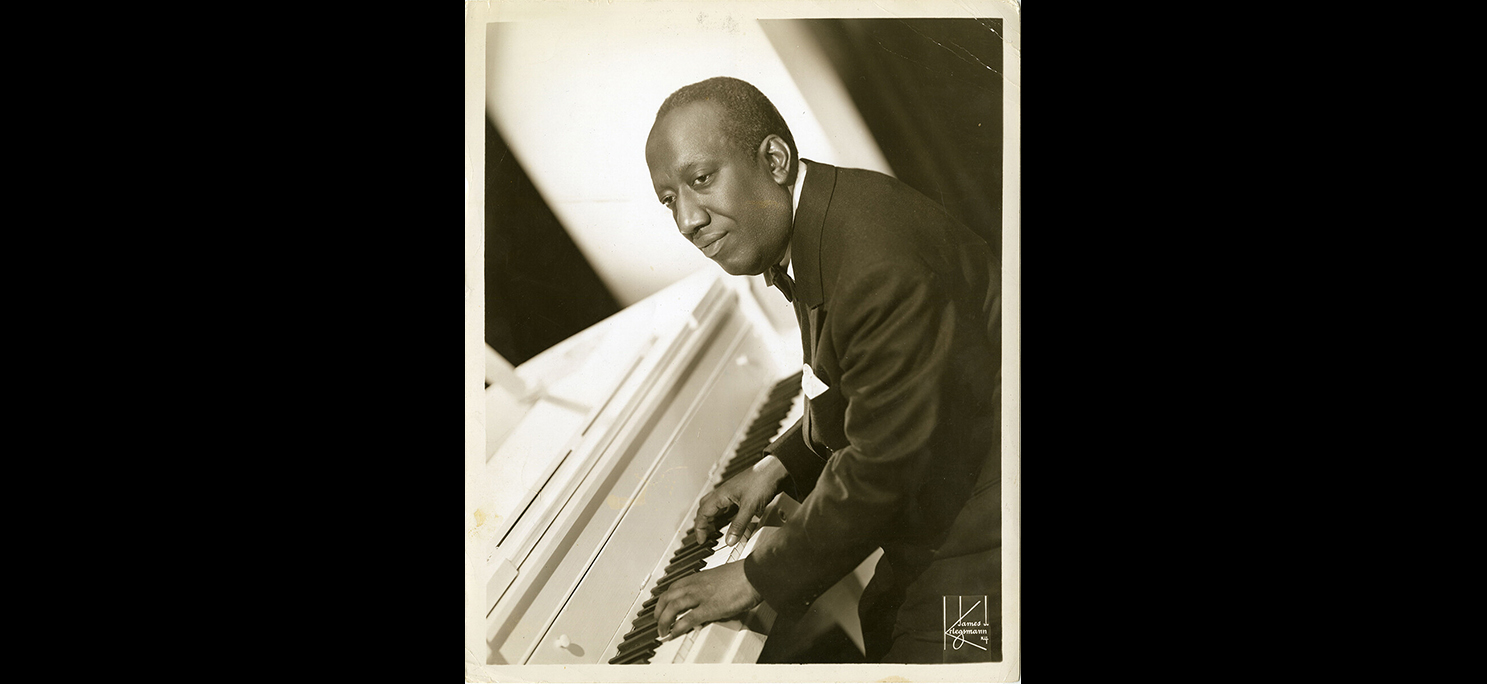
You would be hard pressed to name a single tune that so completely represents the culture of an era as the “Charleston” does for the “Roaring Twenties.” In combination with the dance that accompanied it, and the intoxicating rhythm underlying its energy, the “Charleston” phenomenon became the signature popular performance emblem of the decade. Its origins and codification reflect a thread in American music history that has remained practically invisible not only to the casual observer, but many music critics and historians. It has an ancient pedigree in Africa and underwent a transformation in America from the religious ritual of an isolated community to secular entertainment. It arrived from the coastal southeast in the San Juan Hill section of Hell’s Kitchen in the 1910s where it attracted the attention of James P. Johnson, a Northern pianist, who developed its folk roots into a Broadway hit that became a worldwide sensation in the next decade.
Johnson, born in New Brunswick, NJ in 1894, first encountered the ring shout in his parent’s parlor observing their newly arrived guests from South Carolina and Georgia.[1] By then, the once religious ritual that maintained strong elements of its African origins had become popular entertainment but retained the rhythmic underpinning of what would become the “Charleston.” There are few references describing the ring shout before the Civil War. When the Union Army occupied the Sea Islands off South Carolina, a multitude of Northern missionaries, teachers, and health care workers descended on the Sea Islands to offer resources to the newly freed people. While there, they had a unique, firsthand view of the culture of this isolated society. The “shouts” were a prominent feature in the praise houses that followed the formal religious services. It was a complex amalgam of song, vocalization, movement (dance), and rhythm. The people there became known as Gullah, a term thought to derive from Angola, the place of origin of the preponderance of the enslaved people brought to this region.[2] Those from Georgia were known as Geechies, the name derived from the Ogeechee River and its extensive watershed in the region.
Henry George Spaulding described the shout he observed on the South Carolina Sea Islands in 1863. Spaulding was a Unitarian minister and a member of the U.S. Sanitary Commission during the Civil War. His observations were originally published in the August 1863 issue of Continental Monthly as part of an article entitled "Under the Palmetto." He wrote:
After the praise meeting is over, there usually follows the very singular and impressive performance of the 'shout,' or religious dance of the Negroes. Three or four, standing still, clapping their hands and beating time with their feet, commence singing in unison one of the peculiar shout melodies, while the others walk round in a ring, in single file, joining also in the song. Soon those in the ring leave off their singing, the others keeping it up the while with increased vigor, and strike into the shout step, observing most accurate time with the music. This step is something halfway between a shuffle and a dance, as difficult for an uninitiated person to describe as to imitate. At the end of each stanza of the song the dancers stop short with a slight stamp on the last note, and then, putting the other foot forward, proceed through the next verse. They will often dance to the same song for twenty or thirty minutes, once or twice, perhaps, varying the monotony of their movement by walking for a little while and joining in the singing.[3]
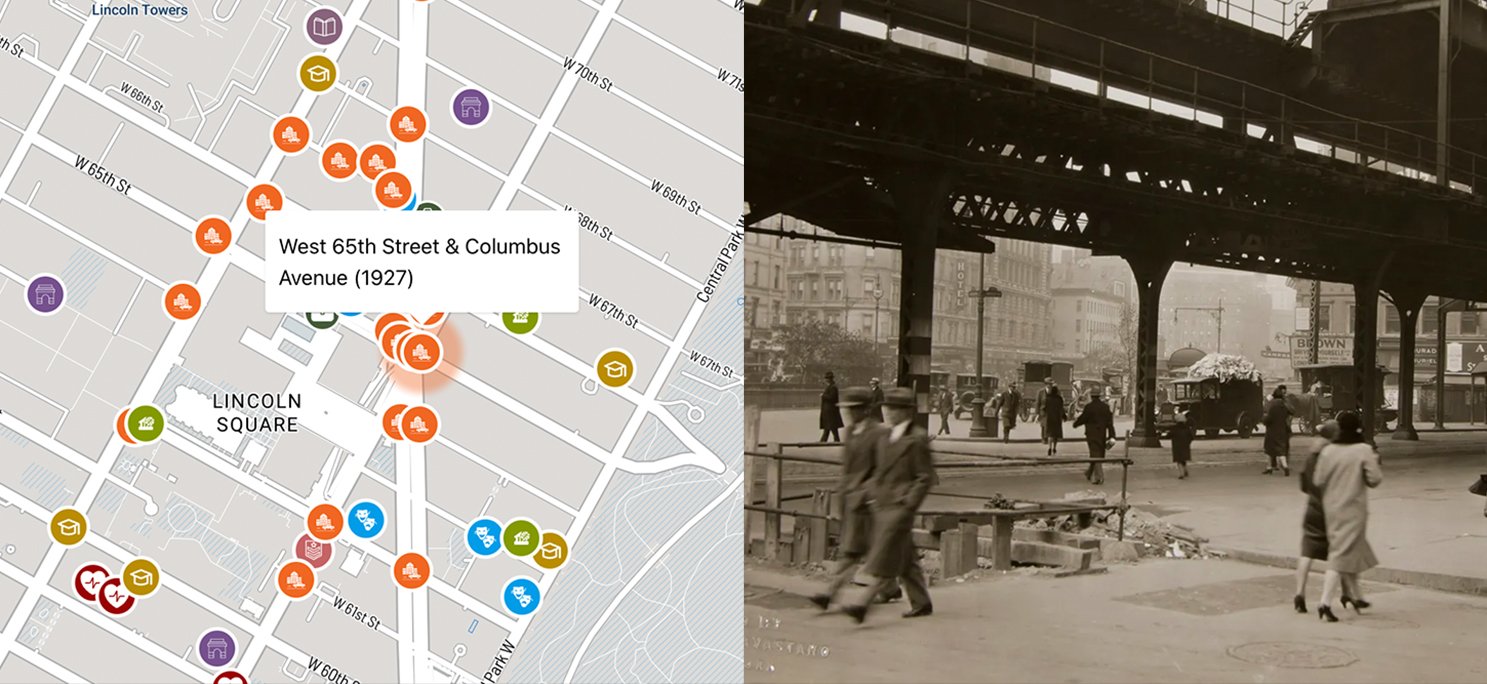
After the Civil War, the ring shout spawned more secular forms of dance that migrated from the rural Gullah and Geechie communities to Savannah and especially Charleston. There is tremendous irony in the fact that America’s “most mannerly city” served as the incubator for the elements of an ethnic life-force that accompanied the “fiery maelstrom of change” that would soon ensue.[4] Starting just before the turn of the twentieth century and continuing into the 1920s, migration up the Eastern seaboard accelerated and brought these dances into San Juan Hill where James P. Johnson observed them and composed for them. He recalled:
The people who came to The Jungles Casino were mostly from around Charleston, South Carolina, and other places in the South. Most of them worked for the Ward Line as longshoremen or on ships that called at southern coast ports. There were even some Gullahs among them.
The Charleston, which became a popular dance step on its own, was just a regulation cotillion step without a name. It had many variations — all danced to the rhythm that everybody knows now. One regular at the Casino, named Dan White, was the best dancer in the crowd and he introduced the Charleston step as we know it. But there were dozens of other steps used, too.
It was while playing for these southern dances that I composed a number of Charlestons — eight in all — all with the same rhythm. One of these later became my famous Charleston when it hit Broadway.[5]
Pianist Willie “The Lion” Smith, Johnson’s good friend and contemporary, corroborates many of the same details, and recalls one dancer in particular who was especially popular at places like Leroy’s and other cabarets in the late teens and early twenties. Russell Brown was from Charleston, and his style Smith described as the same “Geechie step” he had seen a decade earlier in the Jungles, the nickname for the Black section of San Juan Hill. Brown’s nickname was “Charleston,” and Smith recalled that some attributed the name of the dance to Brown and his nickname.[6] One of the most important musical institutions from Charleston that disseminated the nascent dance steps was the Jenkins Orphanage Band. Smith recalled they “used to do Geechie steps when they were in New York on their yearly tour,”[7] excursions that began in the late 1890s. Noble Sissle pointed out the more remote origins of the dance, noting, “They were dancing the ‘Charleston’ fifty years ago at Savannah, Ga; at least they were dancing it twenty years ago, because that was when I learned it.”[8]
By the early 1920s, the distinctive Charleston rhythm began to be codified. In early 1923, cornet player Thomas Morris composed and recorded his “Original Charleston Strut” that incorporated the rhythm in the accompaniment to the final section. Shortly after, in June, Johnson began work in earnest on his first Broadway show, Runnin’ Wild. Starring the comedians Flournoy Miller and Aubrey Lyles who had created a sensation in Shuffle Along two years earlier, Runnin’ Wild was backed by major Broadway producers George White and Archibald Selwyn. It became a huge hit. In Runnin’ Wild, the “Charleston” was both a song feature for nineteen-year-old Elisabeth Welch, and a dance number (choreographed by Elida Webb) for a group called The Dancing Redcaps. Welch had been reared in the St. Cyprian Episcopal Church Choir in San Juan Hill. She was well acquainted with Sea Island culture and had likely encountered various Charleston versions. Welch died in 2003 at the presumed age of 99, and is often credited with introducing the “Charleston,” a credit she dismissed. “I just sang the song,” she said, “then those terrific dancers took over. I always tell people I didn’t dance the Charleston, but they still get it wrong.”[9]
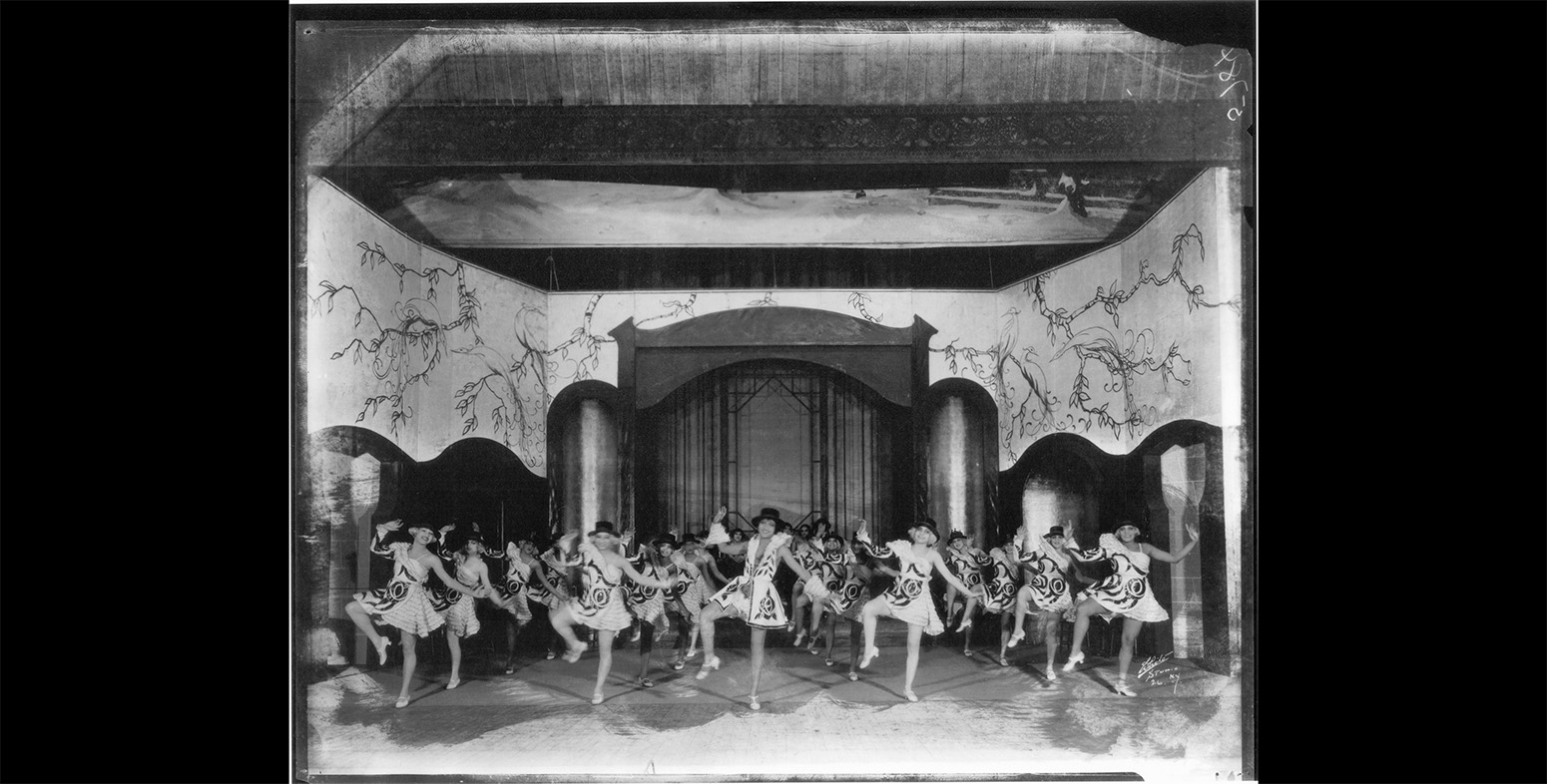
The Dancing Red Caps were led by Tommy Woods, listed as the chief Red Cap, and whose dancing was singled out by many reviewers. Their number in the program was called “Red Cap Capers,” and the routine featured hand-clapping and foot-slapping reminiscent of the nineteenth century tradition of patting Juba. Early in the run of the show, the chorus performed a separate routine titled “Juba Dance.” What became one of the most recognizable movements in popular Charleston dancing, rotating the legs back and forth as the hands crisscross on the knees, has been traced to patting Juba.[10]
Johnson may have drawn influence from songwriter Chris Smith. Smith was a prescient conduit of African American musical traditions. In 1912, he composed one of the first publications described in its title as a blues, “The Blues (But I’m Too Blamed Mean To Cry),” a tune that helped launch the blues craze of that decade. The next year, his tune “Ballin’ the Jack” was a featured stage dance in J. Leubrie Hill’s Darktown Follies. The popularity of the number attracted the first wave of downtown white entertainment seekers to Harlem, a trend that continued well into the 1930s. But even before he popularized those cultural touchstones, Smith, who was born in Charleston, composed a tune titled, “You’re In the Right Church But the Wrong Pew.” It was copyrighted in 1908 by Cecil Mack, who wrote the lyrics and then had it published by the Gotham-Attucks Music Company which he helped found. The chorus incorporates the first known written example of the “Charleston” rhythm. Fifteen years later, Mack wrote the lyrics to Johnson’s tune for the famous “Charleston” song from Runnin’ Wild.
Johnson’s longstanding and deep understanding of these elements from the popular and vernacular expression of Black Southeastern seaboard culture enabled him to apply their most striking components in the tune that brought the rhythm and dance to life for the general public. He transformed a little known African American folk tradition into a Broadway hit. The essence of the “Charleston” rhythm is the syncopation created by the anticipation of the third beat of the measure. The first tone in the rhythmic sequence falls on the downbeat of the first beat of the measure. But instead of the rhythm falling squarely on the downbeat of the third beat of the measure, the note appears slightly early, on the upbeat of the second beat of the measure. Johnson’s repeated use of this characteristic rhythm throughout the melody rather than only as accompaniment, along with its sequence of chromatic movements punctuated by melodic leaps, indelibly marks its dynamic appeal. This formalized rendition codified what had been various circulating folk traditions and soon superseded the disparate versions prevalent in the African American community to become an indelible, unified whole.
Jazz writer, critic, and dancer Roger Prior Dodge attempted to map the consolidation of the component parts (dance, rhythm, tune) into what became the iconic combination, noting:
… the Charleston rhythm had not, up to the time of James P. Johnson’s composition Charleston (introduced in the musical Runnin’ Wild) become unmistakably identified. Whether the dancers actually used a Charleston rhythm before James P.’s piece I do not know. Since that time and with the help of a music strongly accenting this rhythm, the dancers still do not actually follow it, but give the impression that they do only because we associate the step with a music having this rhythm. Maybe James P. made a point of constantly holding to this rhythm because of the impression he got from the dancers, or very likely with the music in a slower tempo some dancers did more than just give an impression of the rhythm and did accent it. Certainly the dance was not evolved to fit James P.’s composition; rather James P. derived his music from his impression of the dancers, with the possibility that some of them actually may have followed the musical rhythm. Thus our visual impression of the step is influenced by the Charleston rhythm in the music so that whatever the dancer is doing we assume he is still following the musical rhythm.[11]
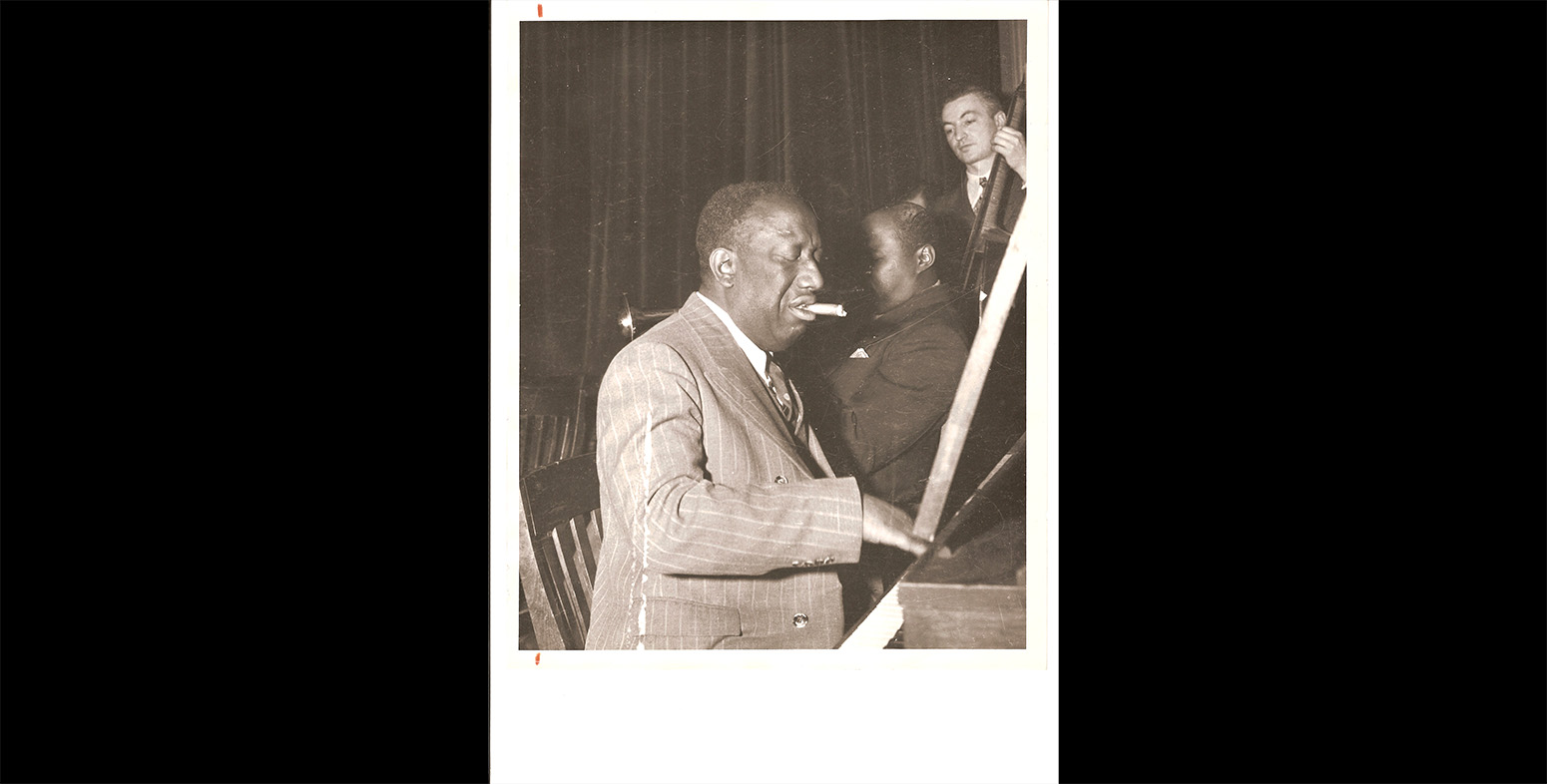
The repeated Charleston rhythm and melodic leaps of Johnson’s tune enabled dancers to migrate away from the previous conventions of social dancing requiring close contact. "Charleston" embodied the sensibility of restlessness. The “roaring twenties” screamed abandonment of social norms, and the public had found the soundtrack to go along with the antics of excess that were defining the culture.
Johnson’s keen eye and ear for elements incubated in San Juan Hill the decade before wrought their transformation into a world-wide sensation, at which point everyone took credit for it. James Weldon Johnson quelled any doubts about where it had come from. He wrote:
Runnin’ Wild would have been notable if for no other reason than that it made use of the ‘Charleston,’ a Negro dance creation which up to that time had been known only to Negroes: thereby introducing it to New York, America, and the world. The music for the dance was written by Jimmy Johnson, the composer of the musical score of the piece. There is a claim that Irvin C. Miller first introduced the Charleston on the stage in Liza; even so, it was Runnin’ Wild that started the dance on its world-encircling course.[12]
Langston Hughes credited Runnin’ Wild and the “Charleston,” (as well as Shuffle Along), with catalyzing the infatuation of white society with African American popular culture.[13]
Despite the clear identification of its origins in Runnin’ Wild and its composer on the reprinted sheet music in 1925 at the height of the Charleston craze, few people in the mainstream were aware of its creators. Johnson and Cecil Mack wrote a sequel appropriately titled “Everybody’s Doin’ the Charleston Now,” copyrighted in September of 1925 by Irving Berlin Music, Inc. It appeared in their short-lived show Mooching Along, but it attracted only modest attention. The “Charleston” craze seemed to pass James P. Johnson by, and he remains little known as its composer.
Notes
[1] Scott E. Brown, Speakeasies to Symphonies—The Jazz Genius of James P. Johnson. (Jackson, MS: University Press of Mississippi, 2026). 19-22.
[2] William S. Pollitzer, The Gullah People and their African Heritage. (Athens, GA: University of Georgia Press, 1999), 108.
[3] Reprinted in Bernard Katz, The Social Implications of Early Negro Music in the United States. (New York: Arno Press, 1969), 4-5.
[4] Mark R Jones, Doin The Charleston. (Charleston, S.C.: East Atlantic Publishing, 2013), 17.
[5] Tom Davin, “Conversations With James P. Johnson,” Jazz Review (July 1959): 12.
[6] Willie “The Lion” Smith and George Hoefer, Music On My Mind. (New York: Da Capo Press, 1964), 96-97.
[7] Ibid, 97.
[8] “In The Theaters,” The Indianapolis Star, January 6, 1925, 7.
[9] Dennis McLellan, “Elisabeth Welch, 99; Durable Diva of Jazz and Pop Made ‘Love for Sale’ Her Signature Song,” Los Angeles Times, July 19, 2003, 82.
[10] Marshal Stearns and Jean Sterns, Jazz Dance — The Story of American Vernacular Dance. (New York: Da Capo Press, 1994), 29; J.A. Rogers, “Jazz at Home,” in The New Negro, Alain Locke, ed., (New York: Antheum, 1977; originally Albert & Charles Boni, 1925), 218.
[11] Roger Prior Dodge, Hot Jazz and Jazz Dance, (New York: Oxford, 1995), 289.
[12] James Weldon Johnson, Black Manhattan. (New York: Antheum, 1977; originally James Weldon Johnson, 1930), 189-190.
[13] Langston Hughes, The Big Sea. (New York: Hill and Wang, 1940), 223.